
Canadian technology leaders feel this pressure acutely. In Robert Half's 2026 Canadian research, 50% of tech leaders said finding skilled professionals was harder than the year before, and 33% planned to increase contract or temporary hiring in the second half of 2026.
But hiring a contractor isn't risk-free. Unclear scope, weak vetting, security exposure, and worker misclassification can turn a quick fix into a costly mess.
This guide covers what IT contractors do, when to hire one, how to find and vet candidates, what belongs in your agreement, and when a managed right-sourcing partner beats hiring solo.
Key Takeaways
- IT contractors suit outcome-based work needing specialized skills, flexible capacity, or a fixed timeline
- Clear deliverables, technical vetting, security controls, and ownership terms matter as much as raw skill
- Confirm worker classification, tax, privacy, and cross-border rules before work starts
- A right-sourcing partner often beats a solo contractor when a project needs senior oversight
What Is an IT Contractor and When Should You Hire One?
An IT contractor is an independent professional hired to deliver a defined technology outcome within an agreed scope, timeline, and fee. That outcome might be a migration, an integration, or a security audit. They're not on your payroll. They run their own business and decide how the work gets done.
IT Contractor vs. Employee vs. Everyone Else
The lines blur fast. Here's the practical distinction:
- Employee: You direct the work, set the hours, and supply the tools. Ongoing relationship, institutional responsibility.
- IT contractor: Delivers an agreed result under a contract for services, often working with several clients at once.
- Freelancer: Usually the same arrangement as a contractor, typically smaller or shorter engagements.
- Staff augmentation: A contractor (or team) embedded in your existing workflows, often sourced through a staffing partner.
- Fractional technology leader: Senior strategic oversight, such as a part-time CTO, rather than task-level delivery.
Canada's CRA doesn't care what you call the arrangement. It looks at control, tools, financial risk, and whether the person can take on other clients. The actual relationship decides worker status, not the label on the contract.
Common IT contractor roles include:
- Software and web developers
- Cloud architects and DevOps engineers
- Cybersecurity analysts and data engineers
- Systems administrators and QA/test automation engineers
- AI/ML specialists and technology project managers
When a Contractor Makes Sense (and When It Doesn't)
A contractor is a strong fit when you need:
- A short-term project with a clear end date
- A specialized skill your internal team doesn't have
- Urgent implementation work, like a security patch or platform migration
- Temporary capacity during a crunch
- Proof-of-concept work before committing to a permanent hire
It's usually the wrong tool when work requires permanent ownership: someone who builds institutional knowledge, supervises junior staff, or carries long-term accountability for a core system. That's an employee's job, not a contractor's.
Why Hire IT Contractors? Compare the Main Engagement Models
Hiring a contractor gets you specialized skills fast, without the long-term commitment of a full-time salary, benefits, and severance liability. You scale capacity up for a project, then scale back down once it's finished.
The real decision isn't "contractor or not." It's which engagement model fits your situation.
Four Ways to Engage Technical Talent
- Direct independent contractor: You source, vet, and manage someone yourself. Lowest overhead, highest management burden.
- Recruitment or staffing agency: The agency sources and screens candidates; you still manage day-to-day delivery.
- Staff augmentation: A provider embeds a vetted specialist into your workflows and handles admin.
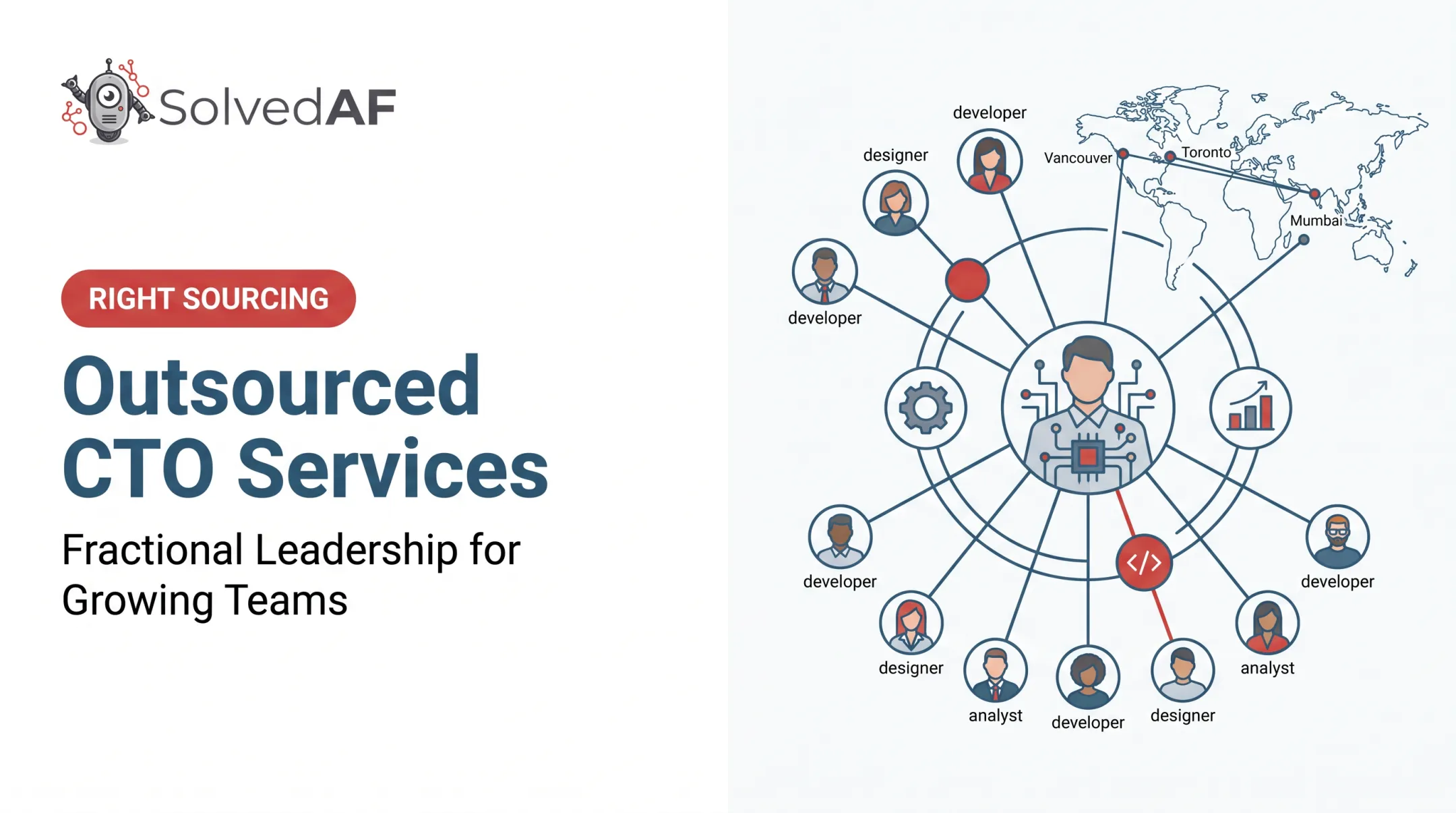
- Technology consulting or right-sourcing partner: A partner owns outcomes—not just headcount—and coordinates multiple roles under senior oversight, which suits multi-skill builds where you need delivery ownership rather than another seat to manage.
| Factor | Direct Contractor | Staffing Agency | Staff Augmentation | Right-Sourcing Partner |
|---|---|---|---|---|
| Best for | Single, well-defined task | Filling one seat fast | Ongoing embedded capacity | Multi-skill projects needing oversight |
| Oversight required | High | Medium | Medium | Low |
| Suits complex, multi-role work | No | Limited | Somewhat | Yes |
What Contractors Actually Cost in Canada
Rates vary by role, seniority, and region. Procom's 2026 Canadian technology pay-rate guide breaks this down by experience level: L1 (2-3 years), L2 (4-6 years), and L3 (7+ years).
| Role | Toronto L1 | Toronto L2 | Toronto L3 |
|---|---|---|---|
| Full-stack developer | $45-55/hr | $55-75/hr | $75-100/hr |
| Cloud architect | $50-65/hr | $70-90/hr | $90-120/hr |
| Security analyst | $50-60/hr | $65-80/hr | $85-110/hr |
| DevOps engineer | $50-65/hr | $65-80/hr | $90-110/hr |
| AI/ML engineer | $105/hr | $120/hr | $150/hr |
Western Canada and Quebec rates for senior roles often run higher. These figures are benchmark pay rates, not a guaranteed agency markup or fixed invoice. Treat them as a starting point for negotiation.
Those rate bands sit against steady demand for flexible capacity. Robert Half research found 33% of technology leaders expected to increase contract hiring in 2026, which is why contract models are becoming standard capacity planning, not only a short-term fix.
How to Hire an IT Contractor: A Practical Step-by-Step Process
A rushed hire creates more problems than it solves. Here's a process that stays tight without slowing you down.
- Define the outcome first. Nail down the business outcome, technical scope, deliverables, timeline, budget range, dependencies, and who internally owns the engagement.
- Write a focused brief. List essential skills, preferred tools, expected availability, communication needs, security requirements, and one or two examples of comparable work you'd accept as proof of fit.
- Source through the right channel. Referrals are reliable but slower; marketplaces move fast but need heavier vetting. Recruiters add a screening layer for a fee, while right-sourcing providers bundle sourcing, vetting, and delivery oversight.
- Screen for capability and reliability. Review relevant portfolios, ask candidates to walk through their approach to a comparable problem, check references, and look at how clearly they document and communicate.
- Run a structured assessment. Ask about architecture decisions, testing strategy, security practices, and handling shifting requirements. Skip unpaid production work — a paid, scoped test task is fair; free deliverables aren't.
- Confirm the logistics. Lock down availability, time-zone overlap, rate structure, milestone expectations, access needs, and whether they'll work solo or alongside your team.
- Hold a documented kickoff. Confirm scope, responsibilities, communication channels, escalation paths, access controls, milestone reviews, and how change requests get approved before work starts.

Skipping step 7 is the most common mistake. Teams agree verbally, then six weeks in, nobody agrees on what "done" means. A one-page kickoff document prevents most of these disputes.
Where to Find and Evaluate IT Contractors
Four channels dominate contractor sourcing:
- Direct referrals and professional networks: highest trust, but a limited pool and slower to fill urgent gaps
- Freelance marketplaces: fast access to a large pool, but vetting falls entirely on you
- Specialist recruiters or staffing firms: pre-screened candidates, but ongoing management stays with you
- Managed technology or right-sourcing partners: sourcing, vetting, and delivery accountability bundled together
A Quick Evaluation Checklist
Score every candidate against the same criteria:
- Relevant project experience, not just general years in the field
- Technical depth demonstrated through real examples
- Verifiable references
- Certifications, only where genuinely relevant
- Written communication quality
- Confirmed availability and time-zone overlap
- Security awareness and familiarity with your existing tools
Once fit is scored, judge price on total cost—not the sticker rate. A low hourly rate can still be expensive. The real cost of a contractor includes management time, quality assurance, documentation, and rework, not just the invoice. A $55/hour contractor who needs constant oversight often costs more than a $90/hour contractor who doesn't.

Keep a simple shortlist of three to five candidates scored against the same checklist, and record why each one was chosen or passed over. It makes your next hire faster.
Contracts, Compliance, Security, and Payments
A strong agreement protects both sides and keeps projects on track.
What Belongs in the Agreement
At minimum, include:
- Parties, scope of work, deliverables, and milestones
- Timeline, fees, invoicing schedule, and expenses
- Acceptance criteria and change-control process
- Confidentiality, intellectual property ownership, and source-code or credential handling
- Data retention, subcontracting permissions, and termination or dispute procedures
- Post-engagement access removal
Classification Isn't Just a Label
The CRA assesses the actual working relationship, not the wording of your contract, when determining whether someone is genuinely self-employed. It examines control over how work gets done, tool ownership, financial risk, and whether the contractor can take on other clients. Calling someone a "contractor" doesn't settle the question if you direct their daily work like an employee. Provincial rules add nuance: Ontario and B.C. apply their own fact-specific tests. If your arrangement looks even slightly ambiguous, get Canadian legal or tax guidance before signing. Misclassification penalties typically fall on the payer. For cross-border engagements, tax treatment generally follows where the work is physically performed. A Canadian contractor working from home for a US client is a different scenario than one performing services on US soil.

Security Safeguards That Should Be Non-Negotiable
- Least-privilege access, limited to what the project requires
- Separate contractor accounts with multi-factor authentication, never shared logins
- Approved devices and tools only
- Secure repositories with logging enabled
- A documented incident-reporting process
- A formal offboarding checklist that removes access the day the contract ends
Matching Payment Models to the Work
| Model | Best for |
|---|---|
| Hourly | Ongoing, variable-scope work |
| Daily | Short, intensive engagements |
| Fixed-price | Clearly scoped deliverables |
| Milestone-based | Multi-phase projects |
| Retainer | Recurring, predictable support |
| This guide is educational, not legal or tax advice. Confirm classification, GST/HST obligations, and cross-border requirements with a Canadian accountant or lawyer before finalizing any agreement. |
When Should You Use a Right-Sourcing or Technology Consulting Partner?
A single contractor works well for a single, well-defined task. Some projects need more: several complementary skills, continuity from strategy through implementation, or coordinated oversight of sensitive systems and compliance risk. That's when a solo hire starts to strain.
This is where a right-sourcing or technology consulting partner earns its keep. SolvedAF works with startups, SMEs, and nonprofits across North America. It combines technology and AI consulting with a qualified pool of onshore and offshore specialists matched to the project, not a single generic resource.

Questions to Ask Any Partner Before Signing
- How does discovery work, and who owns the technical requirements?
- Who provides senior oversight once the project starts?
- How are resources vetted before being assigned?
- Who's accountable if delivery slips?
- Is knowledge transfer built in, or does expertise leave when the contract ends?
- What security practices govern access to your systems?
- Is cost structured transparently?
SolvedAF's right-sourcing process is built to keep delivery accountable rather than handing you a resume and walking away. It runs through four stages:
- Discovery and planning
- Integration
- Execution
- Performance monitoring
If you're weighing a single contractor against coordinated, senior-led delivery, book a call with SolvedAF to talk through your technology, AI, or right-sourcing needs.
Frequently Asked Questions
How much do IT contractors get paid?
Rates vary by role, seniority, location, and engagement type. Toronto benchmarks run roughly $45–$150/hour from junior developers to senior AI/ML engineers (Procom 2026).
What does an IT contractor do?
An IT contractor delivers defined technology services (development, infrastructure, cybersecurity, data, or implementation work) under agreed outcomes and timelines, rather than functioning as a permanent employee.
Who do you hire to make a website?
It depends on complexity. A simple site needs a web designer or front-end developer; an e-commerce platform or custom application needs a full-stack developer or a managed web development team.
Can a US company hire a foreign independent contractor?
Yes, but the company must review worker classification, contract terms, tax withholding, payment methods, privacy obligations, and legal requirements in the contractor's jurisdiction first.
How do I hire an IT contractor?
Define the scope, choose a sourcing channel, vet technical and communication skills, confirm availability and rate, sign a detailed agreement, provide controlled access, and manage delivery against milestones.
What should be included in an IT contractor agreement?
Scope, deliverables, deadlines, payment terms, acceptance criteria, confidentiality, intellectual property ownership, security obligations, subcontracting rules, termination terms, and dispute-handling procedures.